Next-Generation Speaker Design

Image Source: viperagp -
stock.adobe.com
By Tony Ives for Mouser Electronics
Published January 10, 2020
Loudspeakers have been the default way of reproducing audio signals since the early 1920s. Over time, they have
evolved technically and, with the advent of high-quality music streaming and smart speakers, are increasing in
number. For faithful high quality music reproduction, the next generation of speakers are incorporating a number of
advanced design features. In this article, we investigate some of the techniques employed to improve the fidelity of
audio reproduction.
High-end Active Designs
Many modern speakers are active units. In these designs, the audio signal is split into two frequency bands at the
input, by "active" or "crossover" electronic filters. The advantage of dividing the signal at this point as opposed
to using a "passive" unpowered crossover, fed from the amplifier signal at the speaker end, is one of efficiency.
Passive crossovers use high-voltage and inefficient wound components that sap much of the energy from the amplifier.
Meanwhile, an active crossover filter can be designed with more accuracy and fewer losses. There is independent
control over the output signal level—affording simple matching of the crossover to individual drive unit
sensitivities. The active filter’s performance is unaffected by changes in impedance of the drive unit. These
changes can be the result of increased temperature in the drive unit’s voice coil, which in the case of a passive
crossover, may alter the crossover point and potentially introduce distortion. The two discrete frequency
bands—the output from the crossovers—are then fed into two separate amplifiers: One for the
high-frequency driver (tweeter) and one for the mid-/low-frequency driver (woofer). By using two separate amplifiers
in this way, they both operate over a limited bandwidth, which reduces intermodulation distortion. The use of
super-efficient class D power amplifiers, with inbuilt digital signal processing (DSP), is commonplace. The DSP is
used to optimize the output and protect the drivers. These active designs utilize the proliferation of high quality
audio amplifier integrated circuits (ICs), DSPs, and system-on-chips (SoCs) available today. The various features,
conversion, processing, and communication can be positioned in either the digital or analog domain to optimize the
sonic quality of the design. Wireless connectivity allows access to high quality streaming services and connecting
units together for the multi-room experience (Figure 1).
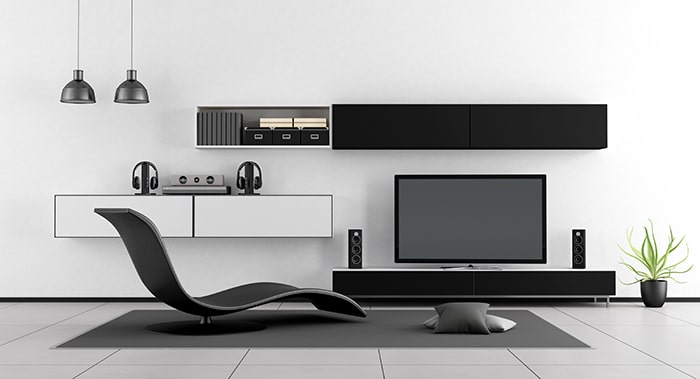
Figure 1: Various different units connecting together come together for a
unique room experience. (Source: archideaphoto/shutterstock.com)
Amplifier Innovations
Class D amplification offers highly efficient audio amplification with a low quiescent (standby) current. The
amplifying devices (transistors) operate as switches, switching fully on or fully off depending on the incoming
signal. These transistors, traditionally metal–oxide–semiconductor field-effect transistors (MOSFETs), have a fast
on/off time (slew rate) and a low on-resistance, with this being important for amplifier efficiency. The audio input
and a precisely generated triangular waveform are input to a comparator, the output (a train of pulses) of which
feeds the transistors. The transistors then turn alternately "hard" on and off between the two power rails, and thus
an output pulse waveform is generated; the pulse width is proportional to the input’s instantaneous signal level.
Finally, this output is fed through a low-pass filter, allowing the original input signal to be reconstructed.
Traditionally, due to the high frequencies being generated internally (RF interference), the poor damping factor,
and the amplifier’s ability to control the excursion of the speaker cone, this class of amplifier has mainly been
featured in designs where weight, efficiency, and small size are important. Examples are car audio, live sound, and
portable systems. However, recent innovations enabled this amplifier class to more closely rival its linear
counterpart. Developments in transistor technology, such as gallium nitride (GaN), can yield very impressive total
harmonic distortion (THD) figures, which compare favorably with more traditional linear designs. Other innovations,
such as the direct digital feedback amplifier technology, based on a unique closed-loop digital architecture and
using high-resolution digital signal processing to maintain audio performance consistency, have enhanced this class
of amplifier further. In the case of an active speaker, this technology can be integrated into the design and
matched to the driver’s impedance and response. This provides consistent sound quality at all levels and protects
the drive units from damage.
Digital Room Compensation (DRC)
Due to their different shapes and the variety of materials used within them—soft furnishings, pipe boxes,
etc.—the reflective properties of listening rooms are not equal to all frequencies (Figure
2). Depending on
their frequency, the waveforms reflect, collide, and are absorbed in a chaotic manner. This causes areas of
constructive and destructive interference. Nodes, areas where certain frequencies are boosted, and antinodes, areas
where certain frequencies are attenuated, are set up throughout the room. The speaker positioning in relation to the
room boundaries can have a huge impact on this, as can the listening position. Obviously, from the point of view of
sonic clarity, this is not ideal. The amount these signals are affected can be significant enough to "color" the
perceived musical content, and this effect is known as "comb filtering."

Figure 2: Soft furnishings on the wall affect the reflective properties of
sound within a recording studio. (Source: Stock image/shutterstock.com)
Recording studios have always used a combination of sound treatment and room compensation in their control rooms to
minimize the room’s effect on the perceived sound. However, DRC systems aim to optimize the speaker's response to a
given room, usually in three steps. First, the system measures the room’s response to a range of frequencies, and an
audio signal containing a random spread of frequencies is reproduced through the speakers (pink noise). A reference
microphone is set up in the listening position and an analysis of the room’s response to these frequencies is made
(spectral analysis). This data is used to generate filters, which then boost or attenuate these "trouble"
frequencies to effectively "flatten" the room’s response. The filter is then set and applied to the audio program.
Many modern speakers incorporate a digital signal processing element in their design, which enables this option to
be part of their feature set. Standalone DRC units, with reference microphones, are also available. This technique
is becoming a more regular feature in next-generation devices.
Cabinet Design
The cabinet is, perhaps surprisingly, the biggest cost element in loudspeaker design. A well-designed and
constructed cabinet must support the driver units firmly and not respond to the vibrations of the drivers
themselves. The front face of the cabinet, on which the driver units are mounted, is called a baffle. The material
used here is often a little thicker than the material used in the rest of the cabinet. The idea is to keep
everything as rigid as possible, so the cabinet is not "heard." Bracing is often used, particularly in the area of
the bass units. This is important, as it raises the resonant frequency of the cabinet in these areas and lowers the
risk of sympathetic vibration. Chambers for the different drive units are often constructed. The sound that comes
from the rear of the bass driver is out of phase and thus, if mixed, would subtract (attenuate) the signal coming
from the front of the speaker. In some designs, this rear voice is phase-shifted, ducted, and added to the signal
emanating from the front of the speaker by means of a port or letterbox opening. Some high-end units feature
inverted horn shapes, behind the drivers, to dampen (attenuate) these unwanted elements from the listener. Extension
tubes, mounted on the baffle, are often employed. Their lengths are carefully calculated to allow resonance in the
chamber at low frequencies, raising the bass efficiency of the speaker. In this way, a smaller design can produce a
bass response that belies its size. Obviously, in the case of an active design with integral signal processing, the
response of the drive units can be optimized for a given design. It has to be said that the design of a successful
high-end cabinet is the result of considerable time and effort (and research), the cost of which can run to many
thousands of dollars.
Drive Units
The most common drive unit encountered as a transducer for mid/low frequencies is a dynamic loudspeaker
(Figure 3).
This utilizes a permanent magnet (often neodymium), a voice coil, a frame or basket, and a speaker cone. The
electrical energy derived from the amplifier is converted by the interaction of the voice coil and the magnet into
motion (excursion) of the cone. This causes compression (forward-moving cone) and rarefaction (backward-moving cone)
of the air mass in contact with the cone, proportionally to the incoming signal, and in this way, sound waves are
produced. There are a number of compromises made here. The cone must be very light, so as to not present inertia
(resistance to movement), and also it needs to be rigid (any distortion across the surface of the cone will result
in coloration of the audio produced). Historically, a wide variety of cone materials have been used, such as treated
paper (very light), aluminum (rigid), and ceramic materials. Recently, aerospace materials have been employed, often
with a golf-ball texture to allow the air to pass over them more smoothly. Additionally, the voice coil represents
an inductive load. It will present different impedances to the amplifier at differing frequencies, posing design
considerations for the amplifier.
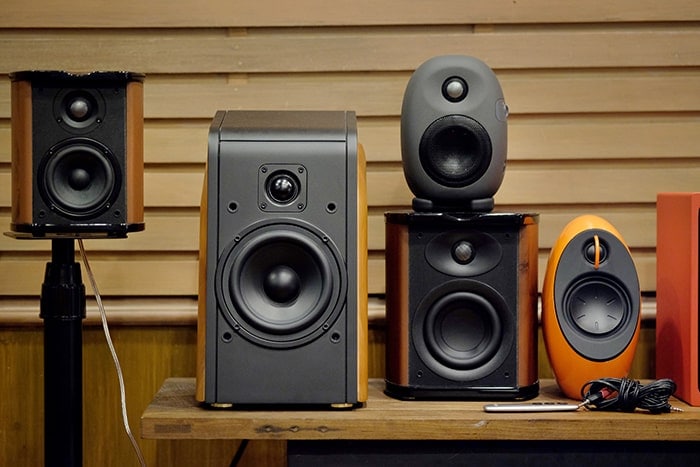
Figure 3: The most common drive unit is a transducer. (Source:
Alpha_7D/shutterstock.com)
High-frequency transducers (tweeters) can fall into two main types. The dynamic variety, constructed in a similar
manner to its low/mid counterpart, but using different materials in its construction, is optimized for its
high-frequency response. Manufacturers can sometimes use synthetic diamonds for their dome material. This is
extremely rigid and also light, so it does not warp and can push air around efficiently. These synthetic diamonds
are grown in ovens at 1500°C, and are expensive to produce.
Other tweeter variants include ribbon types. These feature an ultra-thin metal diaphragm (the ribbon) suspended in
an electromagnetic field. Because this diaphragm is so light, it is able to respond to even the tiniest subtlety and
so yields a very detailed picture of the incoming high frequency audio. The disadvantage of this type is its very
low impedance, which means it may need a transformer to match it to the amplifier. They are expensive and also
delicate. Another type of speaker that deserves a mention here is the electrostatic design. This uses an ultra-thin,
flat diaphragm, sandwiched between two electrically conductive grids. One diaphragm is used to reproduce all
frequencies, as it is thin enough to respond to high frequencies and the surface area is large enough for it to
reproduce bass frequencies. They do this with extreme fidelity (lack of distortion) and, providing they are
positioned carefully in the room, the sound they produce will be less affected by the layout of the room. Because
electrostatic units do not have an enclosure as such, they can be architected to coordinate with the room design.
They are much more delicate than their magnetic-based counterparts, are prone to damage through overload, and so are
less popular in modern designs.
Conclusion
With the proliferation of high-quality audio ICs, DSPs, and SoCs, active designs, with inbuilt streaming and
multi-room capabilities, are becoming more commonplace within the domestic audio sphere. Digital room compensation
and innovative driver control can help a small speaker achieve a really big sound, and a standard bookshelf one to
sound incredible. The active architecture gives the designer control over important parameters, such as drive unit
choice, protection, and the placement of features within the digital/analog domain, allowing for circuit
optimization in these areas, with the added aesthetic benefit of reduced cabling.
 Tony Ives is a freelance musician/studio
engineer
who studied Electrical, Electronic and Communications Engineering at Plymouth polytechnic (Now University of
Plymouth) The early years of his career were in the sphere of IT and included training and accreditation as an Apple
configuration and service engineer. Throughout his adult life, a passion for all things musical and recording drew
him towards the professional audio electronics industry, including a time with a leading mixing desk manufacturer,
before working as a musician/ music educator & studio engineer. He continues to be active in this regard.
Tony Ives is a freelance musician/studio
engineer
who studied Electrical, Electronic and Communications Engineering at Plymouth polytechnic (Now University of
Plymouth) The early years of his career were in the sphere of IT and included training and accreditation as an Apple
configuration and service engineer. Throughout his adult life, a passion for all things musical and recording drew
him towards the professional audio electronics industry, including a time with a leading mixing desk manufacturer,
before working as a musician/ music educator & studio engineer. He continues to be active in this regard.