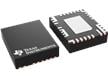

TPS2343DDPR

595-TPS2343DDPR
TPS2343DDPR

Fab. :

Description :
Contrôleurs de tension à remplacement à chaud Dual Slot PCI-X 2.0 Hot-Plug Pwr Cntrlr

Cycle de vie:
Obsolète
Modèle de ECAO:
Téléchargez gratuitement le chargeur de bibliothèque pour convertir ce fichier pour votre outil ECAD. En savoir plus sur le modèle ECAD.
Mouser ne vend pas actuellement ce produit dans votre région.

Disponibilité

Stock:

Attribut de produit Valeur d'attribut Sélectionner l'attribut
Texas Instruments
Catégorie du produit: Contrôleurs de tension à remplacement à chaud
Restrictions en matière d'expédition :
 Mouser ne vend pas actuellement ce produit dans votre région.
RoHS:  
PCI Power Management
1.25 A
13.2 V
10.8 V
2 Channel
3 mA
- 40 C
+ 85 C
SMD/SMT
HTSSOP-80
Reel
Cut Tape
MouseReel
Yes
Marque: Texas Instruments
Sensibles à l’humidité: Yes
Type de produit: Hot Swap Voltage Controllers
Série: TPS2343
Nombre de pièces de l'usine: 2000
Sous-catégorie: PMIC - Power Management ICs
Poids de l''unité: 262,400 mg
Produits trouvés:
Pour consulter des produits similaires, sélectionnez au moins une case.
Sélectionnez au moins une case pour consulter des produits similaires dans cette catégorie.
Attributs sélectionnés: 0

TARIC:
8542399000
CNHTS:
8542319000
USHTS:
8542390090
MXHTS:
85423999
ECCN:
EAR99

LM5060 High-Side Protection Controllers

Texas Instruments LM5060 High-Side Protection Controllers with Low Quiescent Current offers intelligent control of a high-side N-channel MOSFET during normal on/off transitions and fault conditions. The constant rise time of the output voltage results from the inrush current control. Both an Input UVLO (with hysteresis) and a programmable input OVP are provided, with an enable input offering a remote on or off control. The initial start-up VGS fault detection delay time, the transition VDS fault detection delay time, and the continuous over-current VDS fault detection delay time is programmed from a single capacitor. The MOSFET is latched off until either the enable input, or the UVLO input is toggled low and then high when a detected fault condition persists longer than the allowed fault delay time.